Labels

Showing posts with label Latest Technology Updates. Show all posts

Monday, 13 October 2014

Why LED Lights Won the Nobel Prize

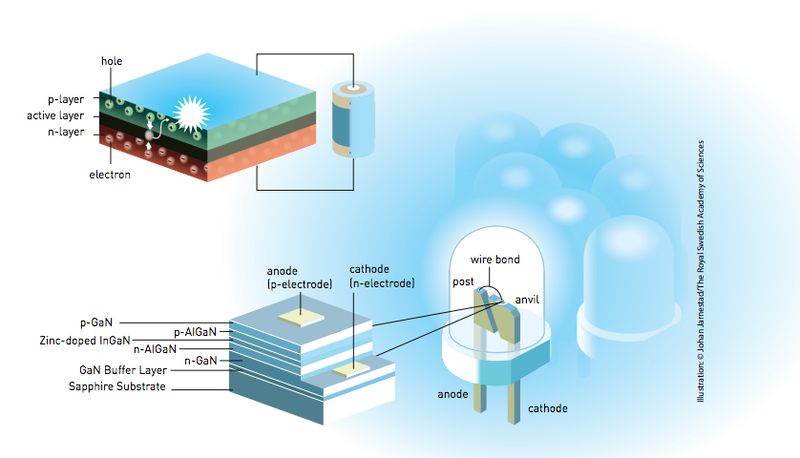
The 2014 Nobel Prize in physics was awarded to Isamu Akasaki, Hiroshi Amano and Shuji Nakamura — three scientists who helped develop blue light-emitting diodes, or LEDs, in the early 1990s.

So why did the Nobel committee think LED lights are such a big deal? In part, they said, because of the technology's potential to change the world: "The LED lamp holds great promise for increasing the quality of life for over 1.5 billion people around the world who lack access to electricity grids: due to low power requirements it can be powered by cheap local solar power."

One big virtue of LEDs is that they're roughly 15 times more efficient than regular bulbs — and they keep improving at a remarkable clip. If they continue to get cheaper, they could replace fluorescents and incandescent lights in places like the United States and Europe, potentially cutting down on a major source of energy use and helping to tackle global warming (although it's also possible that, if lighting gets more efficient, we could just end up using more of it).

So how important are LEDs, really? Here's an overview:

A short history of LEDs
LEDs are often viewed as the next generation of lighting technology. First we had fire. Then gaslight in the 19th century. Then Thomas Edison developed his filament bulbs. More recently, we've had the fluorescent and compact fluorescent bulbs most people now have in their offices and homes.
Those innovations all helped us get more and more lighting with less and less energy. The cost of providing a given amount of light has dropped 3,000-fold since the early 1800s.

Now LEDs look more promising still, since they use less energy and don't contain harmful mercury, like fluorescent bulbs do. But it wasn't always obvious that LEDs would be the next step. Back in the 1980s, diodes could still only emit red or green light, which isn't very handy for lighting a room. But in the 1990s, Nakamura helped develop the first high-brightness blue LED — building on the work of Akasaki and Amano in Japan. Now it was conceivable that LEDs could be used for everyday purposes.
Since then, LEDs have advanced further and become used for an array of different sources. They're in streetlights and traffic lights. They're used for displays in computers and smartphones. But the big, idealistic hope is that they could help bring light to the 1.5 billion people who don't have it.

How LEDs could help light up the developing world

It's worth remembering that there are about 1.2 billion people in the world who still lack access to electricity. And many people who do have electricity barely have enough power for reliable lighting.


As a result, many households still burn either wood or gas for lighting. Not only is that inefficient, but the resulting indoor air pollution is killing millions and millions of people. Plus there are all sorts of knock-on effects — it's much harder for kids to study for school if they can't even read their books.

Now enter LEDs. One big thing these lights have going for them is efficiency. Incandescent lightbulbs are extremely inefficient — it takes a lot of energy to heat up the filament inside, and only a fraction (2 percent or so) of that energy is given off as light. LEDs do considerably better. Engineers can now get about 300 lumens of light from the most advanced LED bulbs for every Watt of electrical power used — compared to just 70 lumens from a compact fluorescent bulb and just 16 for a filament bulb.

In other words, LEDs are about 4 times as efficient as CFLs and 15 times as efficient as filament bulbs. As Charles Kenny explained in Foreign Policy, those low energy demands for LEDs mean that many households that aren't currently connected to the grid could use solar panels and small batteries to power LED lights.

The biggest obstacle is cost: LEDs often have a higher upfront price tag than other types of light bulbs. But that price has been steadily falling over time, to the point where we could start to see wider adoption in poorer countries. (The other advantages? LEDs last longer than compact fluorescent bulbs, they don't break as easily, and they don't contain mercury — so they're easier to dispose.)

Could LEDs help tackle global warming?

The other big potential application for LEDs is in the developed world. It's worth remembering that lighting is a massive source of energy use — it makes up about 17 percent of US electricity consumption.
In theory, LEDs could help change that. Most plans to boost energy efficiency and reduce greenhouse-gas emissions in the United States and Europe envision LEDs replacing all existing lighting technologies by 2050 or so. (See, for instance, this recent UN report on "deep decarbonization.")

The one hitch, however, is what's known as the "rebound effect." Historically, as lighting has gotten cheaper, we've used more and more of it — so that overall energy use for lighting has actually gone up, not down. That's one big consideration here. LEDs could well bolster lighting efficiency and leave us all better off. But it's not guaranteed that energy use — and greenhouse-gas emissions — will go down as a result.

Update: See also my colleague Tim Lee's post on the amazing efficiency progress that LEDs have made over the years. It includes this chart:

THE INVENTORS OF EFFICIENT BLUE LED'S..

SOURCE : a paper from the university of wisconsin

Thank You friends... FoR rEaDiNg My ArTiCle - Bharath Kumar Goud


Sunday, 12 October 2014

WRIST WATCH , THE MECHANICAL GIANT- MOST COMPLEX MACHINE


36 complications, 25 of them visible, 1,483 components, a 1000-year calendar, a price tag of 2.7 million dollars, and 5 years’ work; 99 jewels... 
The glass sapphire case back enables the harmoniously chiselled and decorated pieces that overlap to be admired in a stunning combination as a dazzling ballet. This masterpiece of complications and know how was entirely designed and manufactured by the Franck Muller group and once again demonstrates their vast array of skills and ability in the Art of HAUTE HORLOGERIE. 

Reference: 8888 MGA T CCR QPSE 
Caliber: FM 3480 QPSE 
Movement Mechanic Tourbillon, Carillon Westminster on 4 hammers and 4 gongs, Chronograph with fly-back mechanism and only one push-piece, Perpetual Calendar Secular, Equation of time, Two additional time zones, Automatic self-winding mechnanism for the movement and the Westminster carillon. 


Monday, 29 September 2014

Low-cost, “green” transistor heralds advance in flexible electronics

As tech company LG demonstrated this summer with the unveiling of its 18-inch flexible screen, the next generation of roll-up displays is tantalizingly close. Researchers are now reporting in the journal ACS Nano a new, inexpensive and simple way to make transparent, flexible transistors—the building blocks of electronics—that could help bring roll-up smartphones with see-through displays and other bendable gadgets to consumers in just a few years.

Yang Yang and colleagues note that transistors are traditionally made in a multi-step photolithography process, which uses light to print a pattern onto a glass or wafer. Not only is this approach costly, it also involves a number of toxic substances. Finding a greener, less-expensive alternative has been a challenge. Recently, new processing techniques using metal oxide semiconductors have attracted attention, but the resulting devices are lacking in flexibility or other essential traits. Yang’s team wanted to address these challenges.

The researchers developed inks that create patterns on ultrathin, transparent devices when exposed to light. This light sensitivity precludes the need for harsh substances or high temperatures. “The main application of our transistors is for next-generation displays, like OLED or LCD displays,” said Yang. “Our transistors are designed for simple manufacturing. We believe this is an important step toward making flexible electronics widely accessible.”

Nanotechnology leads to better, cheaper LEDs for phones and lighting

Princeton Univ. researchers have developed a new method to increase the brightness, efficiency and clarity of LEDs, which are widely used on smartphones and portable electronics as well as becoming increasingly common in lighting.

Using a new nanoscale structure, the researchers, led by electrical engineering professor Stephen Chou, increased the brightness and efficiency of LEDs made of organic materials (flexible carbon-based sheets) by 57%. The researchers also report their method should yield similar improvements in LEDs made in inorganic (silicon-based) materials used most commonly today.
A nanotechnology structure called PlaCSH (plasmonic cavity with subwavelength hole-array) has allowed an increase in efficiency of light extraction to 60%, which is 57% higher than conventional high-end organic LEDs. Images: Princeton Univ.

The method also improves the picture clarity of LED displays by 400%, compared with conventional approaches. In an article published online August 19 in the journal Advanced Functional Materials, the researchers describe how they accomplished this by inventing a technique that manipulates light on a scale smaller than a single wavelength.
"New nanotechnology can change the rules of the ways we manipulate light," said Chou, who has been working in the field for 30 years. "We can use this to make devices with unprecedented performance."
A LED, or light emitting diode, is an electronic device that emits light when electrical current moves through two terminals. LEDs offer several advantages over incandescent or fluorescent lights: they are far more efficient, compact and have a longer lifetime, all of which are important in portable displays.
Current LEDs have design challenges; foremost among them is to reduce the amount of light that gets trapped inside the LED's structure. Although they are known for their efficiency, only a very small amount of light generated inside an LED actually escapes.
A PlaCSH in operation.A PlaCSH in operation."It is exactly the same reason that lighting installed inside a swimming pool seems dim from outsidebecause the water traps the light," said Chou, the Joseph C. Elgin Professor of Engineering. "The solid structure of a LED traps far more light than the pool's water."
In fact, a rudimentary LED emits only about 2 to 4% of the light it generates. The trapped light not only makes the LEDs dim and energy inefficient, it also makes them short-lived because the trapped light heats the LED, which greatly reduces its lifespan.
"A holy grail in today's LED manufacturing is light extraction," Chou said.
Engineers have been working on this problem. By adding metal reflectors, lenses or other structures, they can increase the light extraction of LEDs. For conventional high-end, organic LEDs, these techniques can increase light extraction to about 38%. But these light-extraction techniques cause the display to reflect ambient light, which reduces contrast and makes the image seem hazy.
To combat the reflection of ambient light, engineers now add light-absorbing materials to the display. But Chou said such materials also absorb the light from the LED, reducing its brightness and efficiency by as much as half.
The solution presented by Chou's team is the invention of a nanotechnology structure called PlaCSH (plasmonic cavity with subwavelength hole-array). The researchers reported that PlaCSH increased the efficiency of light extraction to 60%, which is 57% higher than conventional high-end organic LEDs. At the same time, the researchers reported that PlaCSH increased the contrast (clarity in ambient light) by 400%. The higher brightness also relieves the heating problem caused by the light trapped in standard LEDs.
Chou said that PlaCSH is able to achieve these results because its nanometer-scale, metallic structures are able to manipulate light in a way that bulk material or non-metallic nanostructures cannot.
Chou first used the PlaCSH structure on solar cells, which convert light to electricity. In a 2012 paper, he described how the application of PlaCSH resulted in the absorption of as much as 96 percent of the light striking solar cells' surface and increased the cells' efficiency by 175 percent. Chou realized that a device that was good at absorbing light from the outside could also be good at radiating light generated inside the device—offering an efficient solution for both light extraction and the reduction of light reflection.
The basic structure of a PlaCSH LED.The basic structure of a PlaCSH LED."From a view point of physics, a good light absorber, which we had for the solar cells, should also be a good light radiator," he said. "We wanted to experimentally demonstrate this is true in visible light range, and then use it to solve the key challenges in LEDs and displays."
The physics behind PlaCSH are complex, but the structure is relatively simple. PlaCSH has a layer of light-emitting material about 100 nm thick that is placed inside a cavity with one surface made of a thin metal film. The other cavity surface is made of a metal mesh with incredibly small dimensions: it is 15 nm thick; and each wire is about 20 nm in width and 200 nanometers apart from center to center. (A nanometer is one hundred-thousandth the width of a human hair.)
Because PlaCSH works by guiding the light out of the LED, it is able to focus more of the light toward the viewer. The system also replaces the conventional brittle transparent electrode, making it far more flexible than most current displays.
"It is so flexible and ductile that it can be weaved into a cloth," Chou said.
Another benefit for manufacturers is cost. The PlaCSH organic LEDs were made by nanoimprint, a technology Chou invented in 1995, which creates nanostructures in a fashion similar to a printing press producing newspapers.
"It is cheap and extremely simple," Chou said.
Princeton has filed patent applications for both organic and inorganic LEDs using PlaCSH. Chou and his team are now conducting experiments to demonstrate PLaCSH in red and blue organic LEDs, in addition the green LEDs used in the current experiments. They also are demonstrating the system in inorganic LEDs.
Besides Chou, the paper's authors are Wei Ding, Yuxuan Wang and Hao Chen, graduate students in electrical engineering at Princeton. Support for the research was provided in part by the Defense Advanced Research Projects Agency and the Office of Naval Research.  Chou recently was awarded a major grant from the U.S. Department of Energy to further advance the use of PlaCSH as a solution for energy-efficient lighting.

Sunday, 28 September 2014

Brain-computer Interfaces


Chilean software engineer Jorge Alviarez, places head sensors on Jenifer Astorga, who suffers from quadriplegia, during a training session for her in Valparaiso city.The ability to control a computer using only the power of the mind is closer than one might think. Brain-computer interfaces, where computers can read and interpret signals directly from the brain, have already achieved clinical success in allowing quadriplegics, those suffering “locked-in syndrome” or people who have had a stroke to move their own wheelchairs or even drink coffee from a cup by controlling the action of a robotic arm with their brain waves. In addition, direct brain implants have helped restore partial vision to people who have lost their sight.
Recent research has focused on the possibility of using brain-computer interfaces to connect different brains together directly. Researchers at Duke University last year reported successfully connecting the brains of two mice over the Internet (into what was termed a “brain net”) where mice in different countries were able to cooperate to perform simple tasks to generate a reward. Also in 2013, scientists at Harvard University reported that they were able to establish a functional link between the brains of a rat and a human with a non-invasive, computer-to-brain interface.
Other research projects have focused on manipulating or directly implanting memories from a computer into the brain. In mid-2013, MIT researchers reported having successfully implanted a false memory into the brain of a mouse. In humans, the ability to directly manipulate memories might have an application in the treatment of post-traumatic stress disorder, while in the longer term, information may be uploaded into human brains in the manner of a computer file. Of course, numerous ethical issues are also clearly raised by this rapidly advancing field.

Bucket wheel excavator


Bucket-wheel excavators (BWEs) are heavy equipment used in surface mining. The primary function of BWEs is to act as a continuous digging machine in large-scale open pit mining operations. What sets BWEs apart from other large-scale mining equipment, such as bucket chain excavators, is their use of a large wheel consisting of a continuous pattern of buckets used to scoop material as the wheel turns. They are among the largest vehicles ever constructed, and the biggest bucket-wheel excavator ever built, Bagger 293, is the largest terrestrial (land) vehicle in human history according to the Guinness Book of World Records.

A bucket wheel excavator (BWE) consists of a superstructure to which several more components are fixed.

The bucket wheel from which the machines get their name is a large, round wheel with a configuration of scoops which is fixed to a boom and is capable of rotating. Material picked up by the cutting wheel is transferred back along the boom. In early cell-type bucket wheels, the material was transferred through a chute leading from each bucket, while newer cell-less and semi-cell designs use a stationary chute through which all of the buckets discharge.

A discharge boom receives material through the superstructure from the cutting boom and carries it away from the machine, frequently to an external conveyor system.

A counterweight boom balances the cutting boom and is cantilevered either on the lower part of the superstructure (in the case of compact BWEs) or the upper part (in the case of mid-size C-frame BWEs). In the larger BWEs, all three booms are supported by cables running across towers at the top of the superstructure.

Beneath the superstructure lay the movement systems. On older models these would be rails for the machine to travel along, but newer BWEs are frequently equipped with crawlers, which grant them increased flexibility of motion.

To allow it to complete its duties, the superstructure of a BWE is capable of rotating about a vertical axis (slewing). The cutting boom can be tilted up and down (hoisting). The speeds of these operations are on the orders of 30 m/min and 5 m/min, respectively. Slewing is driven by large gears, while hoisting generally makes use of a cable system.


Saturday, 27 September 2014

Screenless Display


An illustration picture shows a woman looking at the Facebook website on a computer in MunichOne of the more frustrating aspects of modern communications technology is that, as devices have miniaturized, they have become more difficult to interact with – no one would type out a novel on a smartphone, for example. The lack of space on screen-based displays provides a clear opportunity for screenless displays to fill the gap. Full-sized keyboards can already be projected onto a surface for users to interact with, without concern over whether it will fit into their pocket. Perhaps evoking memories of the early Star Wars films, holographic images can now be generated in three dimensions; in 2013, MIT’s Media Lab reported a prototype inexpensive holographic colour video display with the resolution of a standard TV.
Screenless display may also be achieved by projecting images directly onto a person’s retina, not only avoiding the need for weighty hardware, but also promising to safeguard privacy by allowing people to interact with computers without others sharing the same view. By January 2014, one start-up company had already raised a substantial sum via Kickstarter with the aim of commercializing a personal gaming and cinema device using retinal display. In the longer term, technology may allow synaptic interfaces that bypass the eye altogether, transmitting “visual” information directly to the brain.
This field saw rapid progress in 2013 and appears set for imminent breakthroughs of scalable deployment of screenless display. Various companies have made significant breakthroughs in the field, including virtual reality headsets, bionic contact lenses, the development of mobile phones for the elderly and partially blind people, and hologram-like videos without the need for moving parts or glasses.

Mining Metals from Desalination Brine

Waves crash against a lighthouse during storms that battered Britain and where a 14-year-old boy was swept away to sea, at Newhaven in South East EnglandAs the global population continues to grow and developing countries emerge from poverty, freshwater is at risk of becoming one of the Earth’s most limited natural resources. In addition to water for drinking, sanitation and industry in human settlements, a significant proportion of the world’s agricultural production comes from irrigated crops grown in arid areas. With rivers like the Colorado, the Murray-Darling and the Yellow River no longer reaching the sea for long periods of time, the attraction of desalinating seawater as a new source of freshwater can only increase.
Desalination has serious drawbacks, however. In addition to high energy use (a topic covered in last year’s Top 10 Emerging Technologies), the process produces a reject-concentrated brine, which can have a serious impact on marine life when returned to the sea. Perhaps the most promising approach to solving this problem is to see the brine from desalination not as waste, but as a resource to be harvested for valuable materials. These include lithium, magnesium and uranium, as well as the more common sodium, calcium and potassium elements. Lithium and magnesium are valuable for use in high-performance batteries and lightweight alloys, for example, while rare earth elements used in electric motors and wind turbines – where potential shortages are already a strategic concern – may also be recovered.
New processes using catalyst-assisted chemistry raise the possibility of extracting these metals from reject desalination brine at a cost that may eventually become competitive with land-based mining of ores or lake deposits. This economic benefit may offset the overall cost of desalination, making it more viable on a large scale, in turn reducing the human pressures on freshwater ecosystems.